
Do you dream of a perfectly straight and white smile that gives you confidence and is your best business card? In modern cosmetic dentistry, there is a solution that allows you to achieve a spectacular result in a relatively short period of time.
We are talking about veneers - one of the most popular methods for achieving the smile of your dreams. In this article, we'll explain what exactly veneers are and for whom they would be a great solution.

What are veneers and how do they work?
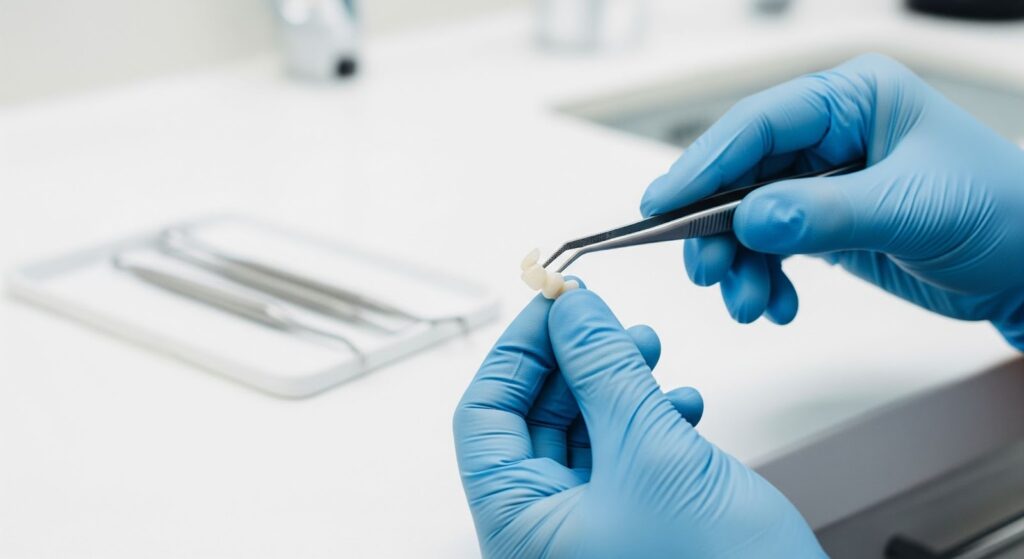
Imagine a veneer as a very thin, precisely made flake of porcelain or composite that the dentist permanently adheres to the front surface of the tooth. Its purpose is to mask any aesthetic imperfections - from unwanted colour to uneven shape to minor bite defects.
It is a minimally invasive method that aims to improve the aesthetics of the smile while sparing healthy tooth tissue as much as possible. Thanks to modern technology and materials, well-made veneers are virtually indistinguishable from natural teeth, guaranteeing a harmonious and beautiful appearance.
For whom are veneers the ideal solution?
Veneers address a wide range of needs for patients who want to improve the appearance of their teeth. Find out if any of the following problems apply to you too.
Problem 1: Discolouration that whitening will not remove
Some discolorations are resistant to traditional whitening methods. This is particularly true of dead teeth after root canal treatment, which darken from the inside over time, as well as stains caused by taking certain antibiotics in childhood.
In such cases, stain veneers act as a new, perfectly white surface that permanently covers up the unsightly tooth colour.
Problem 2: Minor malocclusion and correction of tooth shape
Not everyone has to opt for months of orthodontic treatment, to correct minor imperfections. Veneers can work wonders for minor crowding, rotation or unevenness.
They are also an excellent tool for correcting the shape of teeth - with them we can lengthen worn teeth, widen those that are too narrow or give them a more rounded shape.
Problem 3: Diastema and unwanted gaps between teeth
Diastema, the characteristic gap between the upper teeth, is a trademark for some, while for others it is a source of complexes. If you belong to the second group, veneers are the solution for you.
The dentist can design slightly wider veneers to bridge the gap in an aesthetically pleasing and natural way, creating a compact and harmonious dental arch.
Problem 4: Recovering from injury and hiding imperfections
A chipped corner of a tooth, a crack in the enamel or its inherent imperfections are problems that veneers successfully solve. The bonded flake not only restores the teeth to their ideal appearance, but also strengthens their structure and protects them from further damage.
Porcelain or composite veneers?
At our clinic, we offer two main types of veneers and the choice depends on the patient's needs and expectations. Porcelain veneers are a premium solution. They are individually created in a prosthetic laboratory, which guarantees the highest precision, durability and aesthetics that remain unchanged for years. The porcelain perfectly mimics natural glaze and is completely resistant to discolouration from coffee, tea or wine.
An alternative is composite veneers (often called bonding), which the dentist performs directly on the patient's tooth in a single visit. It is faster and more cost-effective and ideal for smaller corrections. Although they are less durable than porcelain, they are an excellent way to improve your smile quickly.
When are veneers not recommended? Main contraindications
Patient safety is our top priority. Therefore, it is important to know that there are situations in which the placement of veneers should be postponed or other treatment options considered. The main contraindications are:
- Active caries outbreaks or inflammation of the gums, which need to be treated as a matter of priority.
- Bruxism, This is habitual teeth grinding, which can lead to damage to the veneers (this requires the use of a relaxation splint).
- Significant malocclusion or missing teeth, which are eligible for orthodontic or prosthetic treatment.
- Insufficient or very poor quality enamel.
Your first step to a new smile - a consultation at our clinic in Warsaw
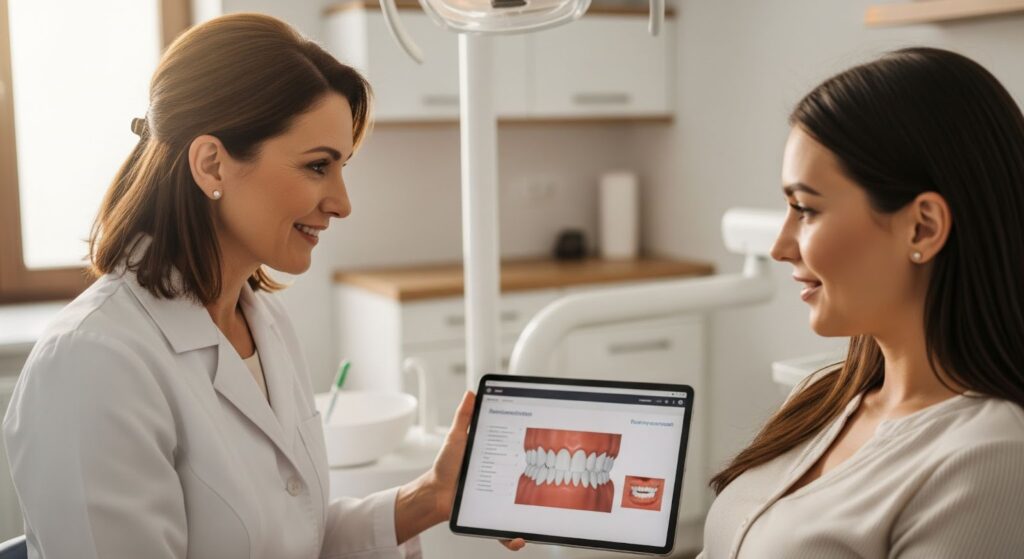
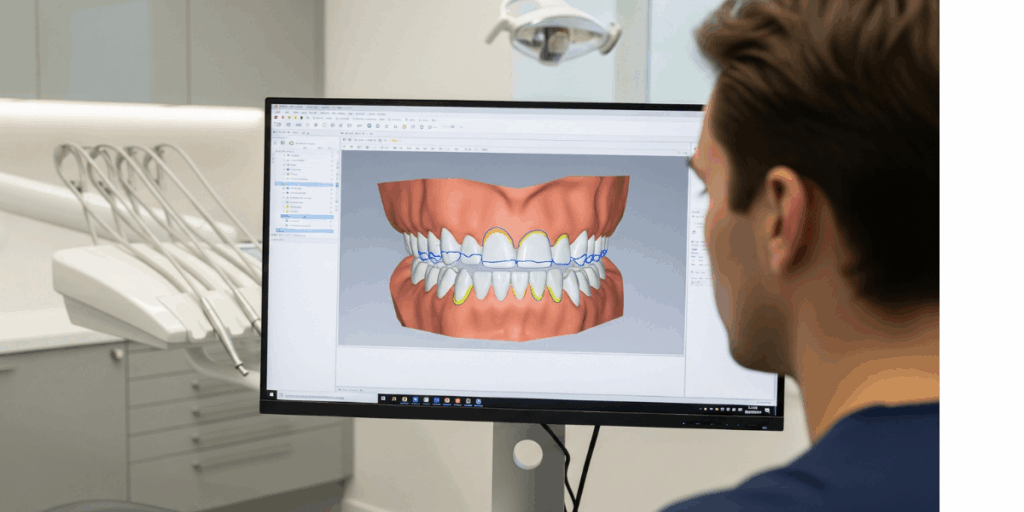
It all starts with a detailed consultation at our clinic in Warsaw's Wola district. This is the moment when we can get to know you, listen to your expectations and think together about the best solution. Thanks to comprehensive diagnostics, we can accurately assess the condition of your teeth.
During your appointment, the doctor will provide you with a personalised treatment plan, explain the individual steps and answer any questions you may have - including those regarding the durability or price of the veneers.
Veneers in a nutshell - a summary of the key benefits
- Aesthetic effect - immediate improvement in tooth colour and shape.
- Durability - a beautiful smile for many years (especially with porcelain veneers).
- Minimal invasiveness - saving the tooth's own tissues.
- Security - materials are completely safe for the body.
Frequently Asked Questions (FAQ)
How long do veneers last?
The longevity of the veneers depends mainly on the type of veneer and the patient's oral hygiene care. High-quality porcelain veneers are an investment for years - they are estimated to last 10-15 years, and often even longer.
Composite veneers need to be refreshed or replaced every few years (usually 3-5). Regular check-ups and professional hygiene are important in both cases.
Does it hurt to place veneers?
This is one of the most common fears, but completely unfounded. The entire process of preparing teeth for veneers takes place under local anaesthetic, making it completely painless. After the procedure, there may only be temporary, slight tooth sensitivity, which quickly passes.
Can veneers be whitened or do they become discoloured?
Porcelain veneers retain their colour permanently and are highly resistant to staining from coffee, tea or red wine - their surface is as smooth as glass. For this reason, they also cannot be bleached.
Therefore, we recommend whitening your remaining teeth before placing veneers to match the colour of the veneers to the target whiteness of your entire smile. Composite veneers may change colour slightly over time, just like natural teeth.
Do veneers damage natural teeth?
The myth of „sawing” teeth down to nothing is very damaging. Modern cosmetic dentistry is based on saving the patient's own tissues as much as possible.
Preparing a tooth for a veneer involves minimally grinding away the outer layer of enamel (usually about 0.3-0.5 mm) to make room for the veneers. This is a safe procedure that, when done correctly, does not damage the tooth but actually strengthens its structure.

Want to find out how veneers can transform your smile?
Don't put off your dreams for later. Take the first step today and make an appointment for a consultation at the Modern Dental & Orthodontics clinic in Warsaw.