
Bleeding gums when brushing? An unpleasant smell from the mouth despite good hygiene? These may be the first, often disregarded, signs of periodontal disease — the most common cause of tooth loss in adults.
Periodontitis, an inflammation of the periodontal tissues, leads to damage to the structures supporting the teeth, tooth mobility and, in severe cases, tooth loss.
In this article we will guide you through the entire process. You will learn about the symptoms and causes of periodontitis, and then about the treatment process — from the first consultation to long-term care.

Periodontitis — symptoms you must not ignore
The disease often develops slowly and is initially painless. This is why vigilance and attention to subtle changes are so important. Consult a periodontist if you notice:
- Bleeding gums — not only when brushing, but also when eating hard foods.
- Redness, swelling and tenderness of the gums.
- Persistent bad breath that does not go away after brushing.
- Exposure of the tooth cervical areas, making the teeth appear longer.
- Tooth sensitivity to cold, hot or sweet foods.
- Tooth mobility — this is already an advanced symptom requiring immediate intervention.
The main local cause of periodontitis is the accumulation of bacterial plaque, which over time hardens to form dental calculus. However, the development of the disease is also influenced by genetic predisposition, smoking, uncontrolled diabetes and hormonal changes.
How to treat periodontitis effectively — a step-by-step treatment plan
Effective treatment of periodontitis is a process that requires close cooperation between the patient and the periodontist. The goal is to halt the progression of the disease, regenerate damaged tissues where possible and, above all, to maintain the results in the long term.
Step 1: Precise periodontal diagnostics
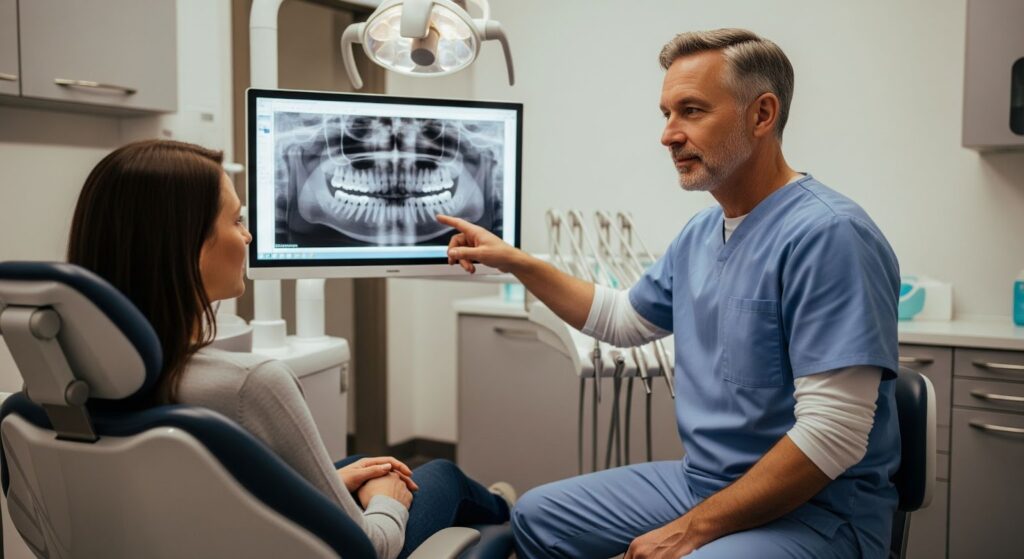
There is no effective treatment without an accurate diagnosis. The first and most important step is a periodontal consultation. The clinician carries out a thorough examination, measures pocket depths (the depth of the space between the gum and the tooth) and assesses the mobility of the teeth.
Modern imaging diagnostics also play a key role here. At our clinic in Wola, Warsaw, we use a cone-beam CT scanner (CBCT), which allows precise three-dimensional assessment of the extent of bone loss.
Step 2: The hygiene phase — the foundation of treatment
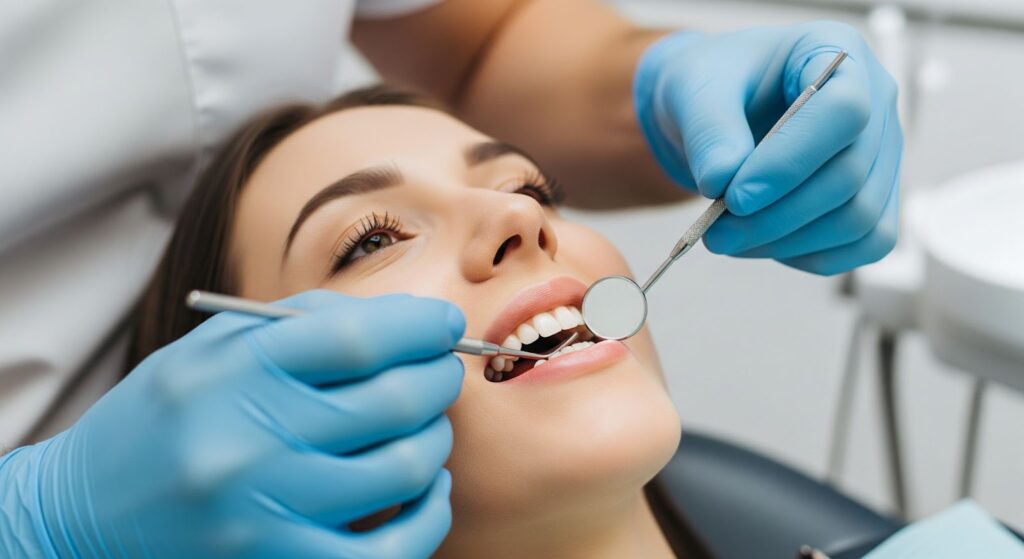
This is the most important stage in the fight against the cause of the disease — bacterial deposits. Professional hygiene, performed by an experienced dental hygienist, includes supragingival and subgingival scaling and air-polishing.
The next procedure is closed curettage. This is a deep, non-surgical cleaning of the root surfaces under local anaesthesia. The aim is to remove subgingival calculus and infected tissue from the periodontal pockets.
Step 3: The corrective (surgical) phase
When non-surgical treatment is insufficient, advanced procedures are employed to rebuild and regenerate the damaged tissues. These include:
- Open Flap Curettage: A surgical procedure performed for very deep periodontal pockets. It involves reflecting the gum, which gives the clinician direct visual and instrumental access to the root surface and the bone defect. This allows thorough debridement and the application of regenerative materials.
- Gingivoplasty (gum contouring): A procedure involving the surgical reshaping of the gums. It is used to restore their physiological shape and improve aesthetics.
- Recession coverage with a connective tissue graft: An advanced microsurgical procedure that allows the gum to be rebuilt where it has receded, exposing the root surface. The grafted tissue, usually harvested from the palate, covers the exposed root and restores the protective gum architecture.
- Vestibuloplasty: A procedure aimed at increasing the space between the lip/cheek and the alveolar ridge, which improves the conditions for oral hygiene and the stability of the gum around the teeth.
Step 4: The maintenance phase — the key to long-term health
How to cure periodontitis is one question, but how to maintain the results is another, equally important one. Treatment does not end with the procedures.
Where the disease has led to tooth mobility, we use splinting with glass-fibre reinforcement. Thin, discreet strips of glass fibre are bonded to the inner surfaces of the teeth, stabilising them and distributing occlusal forces evenly.
In addition, regular follow-up visits are an absolute essential. The maintenance phase consists of systematic appointments (usually every 3–6 months) at which the hygienist assesses the condition of the gums, removes new deposits and monitors treatment progress.
Your role in the fight against periodontitis — how to care for the gums at home
Even the best specialist cannot win against the disease without your commitment. Your daily habits have a significant impact on the success of therapy. Effective home periodontal care is based on:
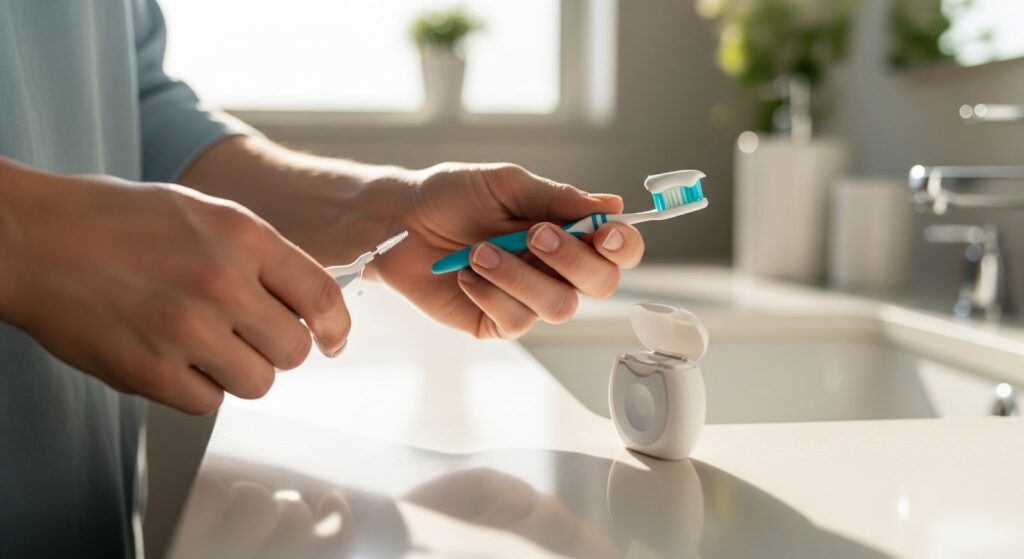
- Correct brushing (at least twice daily for 2–3 minutes).
- Daily cleaning of the interdental spaces with dental floss, interdental brushes or a water flosser.
- Using toothpastes and mouth rinses recommended by the clinician.
- A healthy diet and limiting harmful habits, especially smoking.
Frequently Asked Questions (FAQ)
1. Can periodontitis be completely cured?
Periodontitis is a chronic disease, which means it cannot be "cured" in the sense of permanent, once-and-for-all elimination, as one cures an infection with antibiotics. However, with appropriate treatment and consistent maintenance, the disease can be effectively controlled and its progression halted.
2. Is periodontitis treatment painful?
All procedures are performed under local anaesthesia, ensuring complete patient comfort. After the procedure transient tenderness and sensitivity may occur, which usually resolves within a few days.
3. How long does periodontitis treatment take?
The duration depends on the severity of the disease. The intensive phase (diagnostics and hygiene) may take from several weeks to several months. The maintenance phase continues indefinitely — regular appointments every 3–6 months.
4. Is periodontitis hereditary?
A susceptibility to periodontal disease can be hereditary. If periodontitis has occurred in your family, you should pay particular attention to prevention and attend regular check-ups.
Book an appointment
Have you noticed any of the symptoms described? Do not wait for the problem to worsen. Periodontitis is a disease that will not resolve on its own. Take the first step — book a consultation at Klinika Modern Dental & Orthodontics.
Book a periodontal consultation at Modern Dental & Orthodontics in Warsaw’s Wola district. Our team of specialists will carry out a thorough diagnosis and prepare an individual treatment plan tailored to your needs.