
The first visit to the dental clinic is an event for a child that can shape their attitude towards caring for their teeth and dental treatment for the rest of their life.
This article is a comprehensive guide that explains step by step how to ensure that the first dental visit is a friendly and calm experience.

When is the best time for a child's first dental visit?
Many parents think that a visit to the dentist is only necessary when the child has a full set of primary teeth or when a problem arises. This is a mistake. According to the recommendations of specialist paediatric dental associations, the first visit should take place after the eruption of the first tooth or no later than the child's first birthday.
Why so early? Because modern paediatric dentistry focuses on prevention. The first dental visit with a baby is above all a check-up and a conversation with the parents about correct oral hygiene and the baby's diet.
The adaptation visit — building positive associations with the dentist
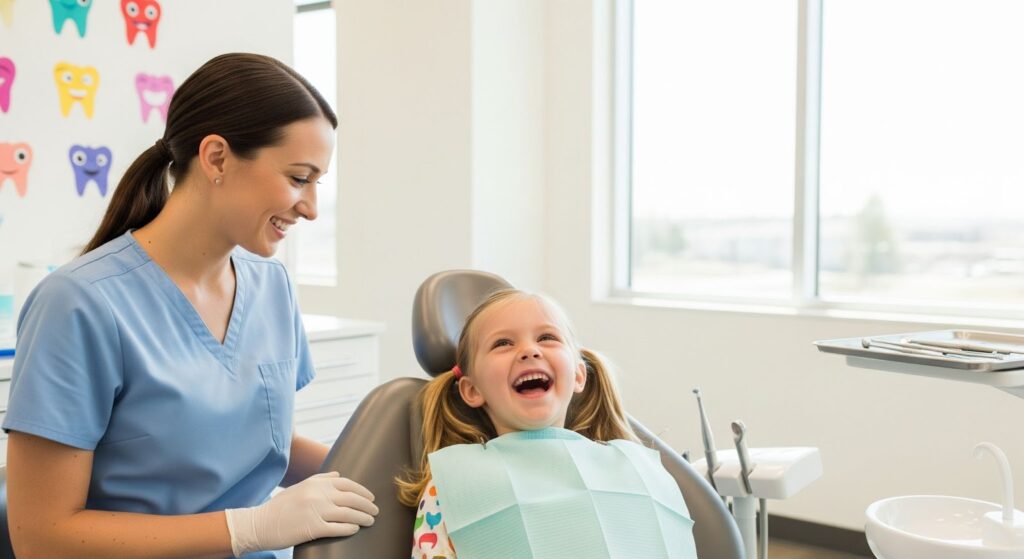
The absolute key to success is the adaptation visit. This is not a treatment visit but rather a friendly get-to-know-you session in the form of play, the purpose of which is to build a positive and trusting relationship between the child and the dental team.
During this visit the child can look forward to:
- A "ride" in the dental chair, which goes up and down.
- A demonstration of "magical" instruments, such as a mirror for looking at little teeth, the "puffer" (the air–water syringe) and the "water vacuum cleaner" (the suction), presented in a child-friendly way.
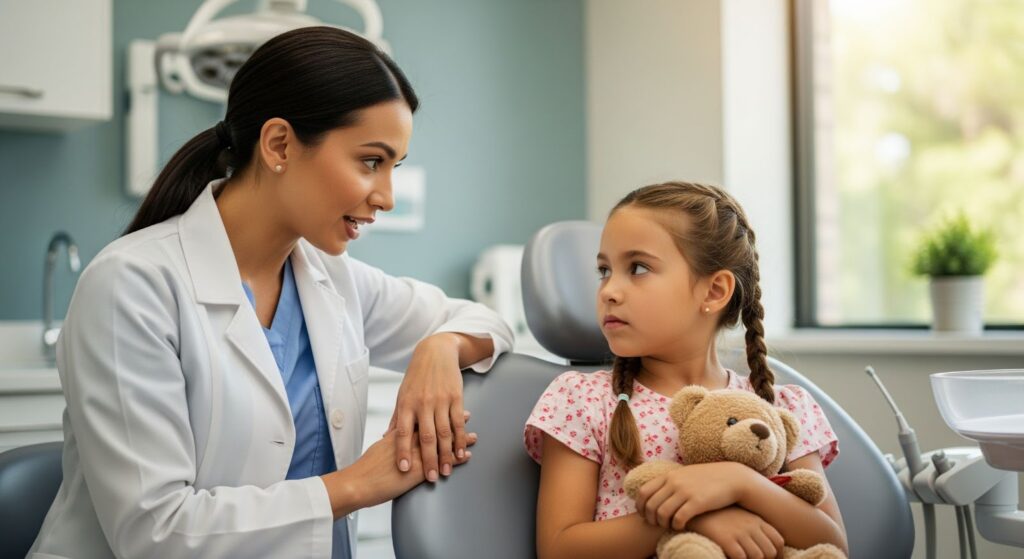
- Counting teeth together — and often counting the teeth of a favourite cuddly toy that accompanies the child.
A scenario like this means that the clinic is no longer a strange, frightening place but becomes a space for play. It is the best investment in your child's future dental health.
How to prepare the child for the visit — your role is key!
Preparations begin at home, and your attitude is the most important factor. A child is like a radar — they pick up on your emotions perfectly.
Firstly, talk about the visit in a positive and natural way. Instead of building tension, present it as an interesting event. Say: "We are going to visit a nice doctor who will count your little teeth and show you some cool things."
Secondly, be careful with your words. Never use expressions that provoke fear: "pain", "drilling", "pulling out", "needle". You should also absolutely avoid false promises such as "it won't hurt" — because you do not know the nature of any future treatment.
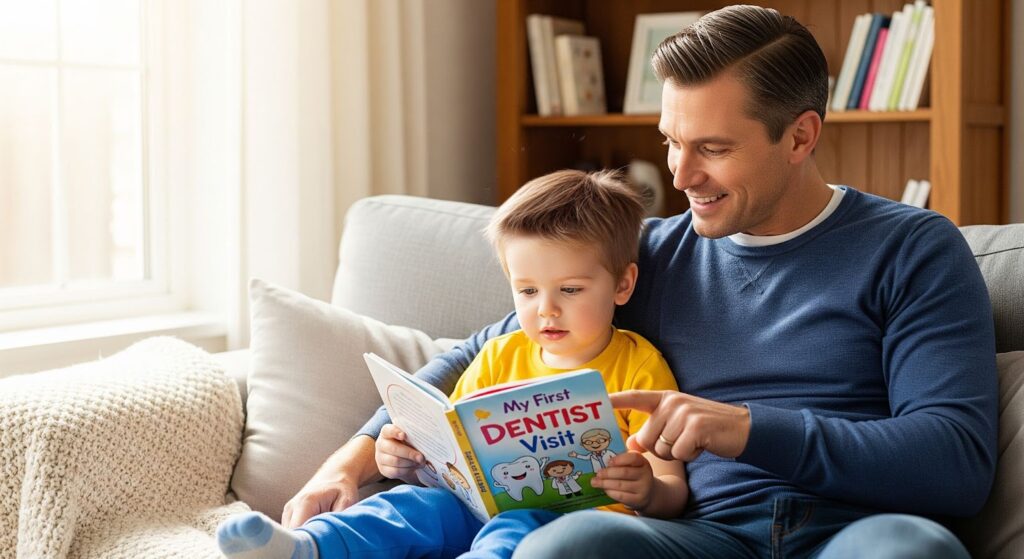
An excellent way to prepare is learning through play. Read books about dental visits, play at being a dentist at home, and watch appropriate cartoons on the subject.
Why is treating primary teeth so important?
We often hear the myth: "Why bother treating baby teeth if they're going to fall out anyway?" This is one of the most harmful beliefs. Untreated primary teeth pose a risk of:
- Damage to the developing permanent tooth buds, which lie directly beneath the primary teeth.
- Development of malocclusion — premature loss of primary teeth causes the other teeth to shift, leaving insufficient space for the permanent teeth.
- Spread of infection to the rest of the body.
Treating primary teeth is an investment in a healthy smile for life. Premature loss of teeth due to caries can lead to crowding and the need for future orthodontic treatment.
Frequently Asked Questions (FAQ)
1. How long does an adaptation visit last?
It usually lasts 15 to 30 minutes. The time is tailored to the individual needs and mood of the child. What matters most is the quality of the encounter, not its length.
2. Can I be present in the treatment room with my child?
Of course — your presence, especially during the first visits, gives the child a sense of security. It is important, however, that during the visit you take on the role of a calm observer and let the dentist build a rapport with your child.
3. What if my child is still afraid and cries?
This happens and is entirely normal. A professional paediatric dentist knows how to handle such situations. We never treat "by force". If the child is not ready, we will make further adaptation visits.
The key is patience and understanding. If the child has a severe fear of the dentist, methods such as inhalation sedation (laughing gas) are available, which will gently calm the little patient.
4. How often should we visit the dentist with the child?
After the adaptation visit, check-ups should take place every 4–6 months. Primary teeth are less mineralised than permanent teeth, so caries can progress very quickly in children.
Book an adaptation visit
Your beautiful smile is our mission, and the health of our youngest patients is our priority. Do not wait for a problem to arise. Book an adaptation visit at Klinika Modern Dental & Orthodontics — and let the very first dental experience be a positive one.