
Modern dentistry does not treat dental calculus merely as an aesthetic defect. It is a biologically active deposit that constitutes a proven risk factor for periodontal disease and may contribute to systemic health problems. This article explains what calculus is, why it is dangerous and how it can be removed professionally and prevented at home.
What exactly is dental calculus? A biological perspective
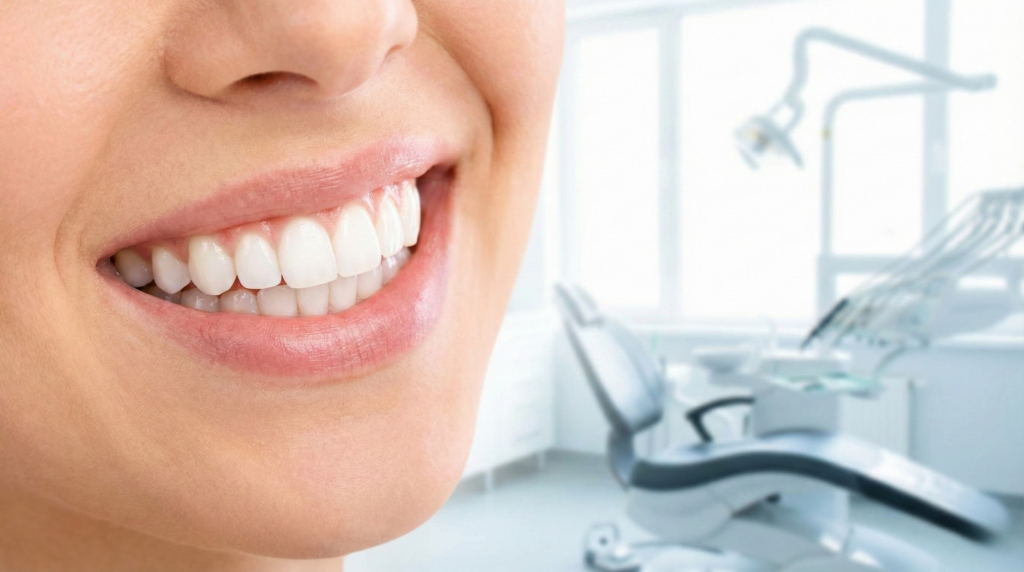
Dental calculus (Lat. calculus dentalis) is a mineralised form of bacterial plaque. Its formation begins gradually — first a pellicle (a thin protein film) forms on the tooth surface, then bacteria colonise it, creating a structured biofilm. If the biofilm is not removed regularly, calcium and phosphate ions from saliva begin to crystallise within it — creating hard deposits that can no longer be removed with a toothbrush.
Types of calculus: supragingival and subgingival
For oral health it is essential to distinguish two types of hard dental deposits:
- Supragingival calculus: Visible to the naked eye, usually white or yellowish. It is located above the gum line. It has a clay-like consistency and is relatively easy to remove during a professional hygiene appointment.
- Subgingival calculus: Far more dangerous, hidden within the gingival pockets. It is dark brown or black and is much more heavily mineralised than supragingival calculus. Its removal requires specialist instruments and clinical experience.
Why is calculus dangerous?
The presence of calculus is not merely an aesthetic problem. Scientific studies confirm that dental calculus is a secondary aetiological factor in periodontal disease — its porous surface provides an ideal environment for pathogenic bacteria. Calculus that is not removed leads to chronic gingival inflammation, pocket formation and ultimately periodontal bone loss.
Consequences of neglecting hygiene:
- Periodontitis: Progressive loss of bone and tooth stability.
- Halitosis: Chronic bad breath caused by anaerobic bacteria.
- Systemic impact: Bacteria from subgingival calculus can enter the bloodstream. Studies indicate a link between periodontal disease and an increased risk of cardiovascular disease, diabetes and adverse pregnancy outcomes.
How to check whether I have dental calculus?
Run your tongue along the inner surface of the lower front teeth. If you feel a roughness that you cannot remove with a toothbrush, you probably have supragingival calculus. Subgingival calculus is invisible and can only be detected during a dental examination (probing, radiographic assessment).
Professional calculus removal: scaling and air-polishing
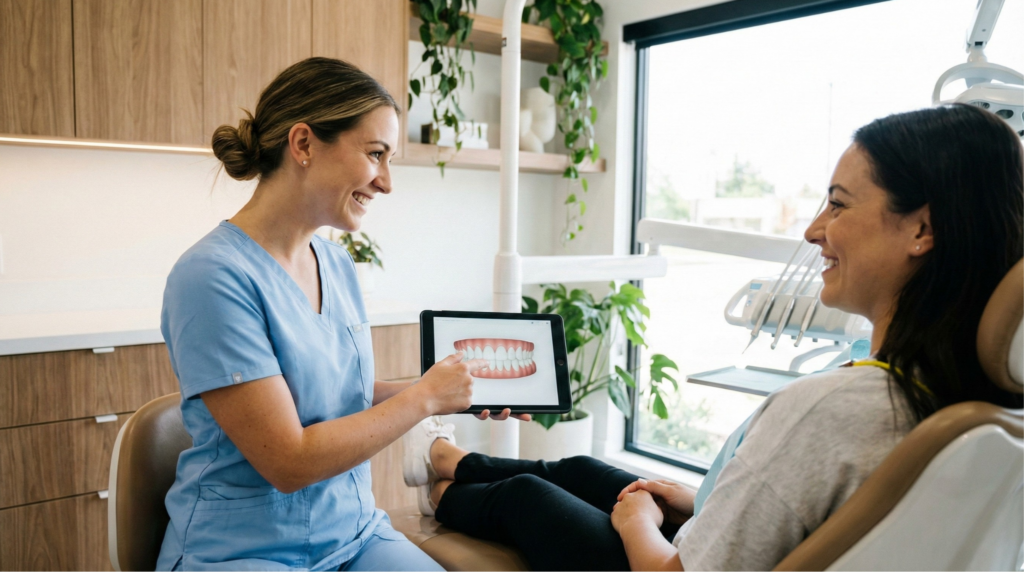
Contemporary preventive care, as practised at Modern Dental & Orthodontics, is based on so-called PMPR (Professional Mechanical Plaque Removal). This is a systematic approach to removing all deposits — calculus, biofilm and staining.
Stages of the procedure at the dental clinic:
- Scaling: High-frequency ultrasonic vibrations (20,000–45,000 Hz) are used to break up hard calculus. With correct technique the procedure is safe for enamel — it does not damage the tooth structure.
- Air-polishing: A pressurised water jet with specialist powder removes staining from coffee, tea and tobacco from hard-to-reach areas. Different powders (glycine, erythritol) are used depending on the clinical situation.
- Polishing: Smoothing of the tooth surfaces, which delays the re-accumulation of plaque.
- Fluoridation: Sealing the cleaned surfaces to protect against sensitivity and caries.
Home prevention — how to slow the mineralisation process?
Completely halting the deposition of deposits is virtually impossible, because the mineralisation of bacterial plaque is a natural biological process. However, it can be substantially slowed by appropriate daily hygiene.
Here are the key principles for protecting your smile:
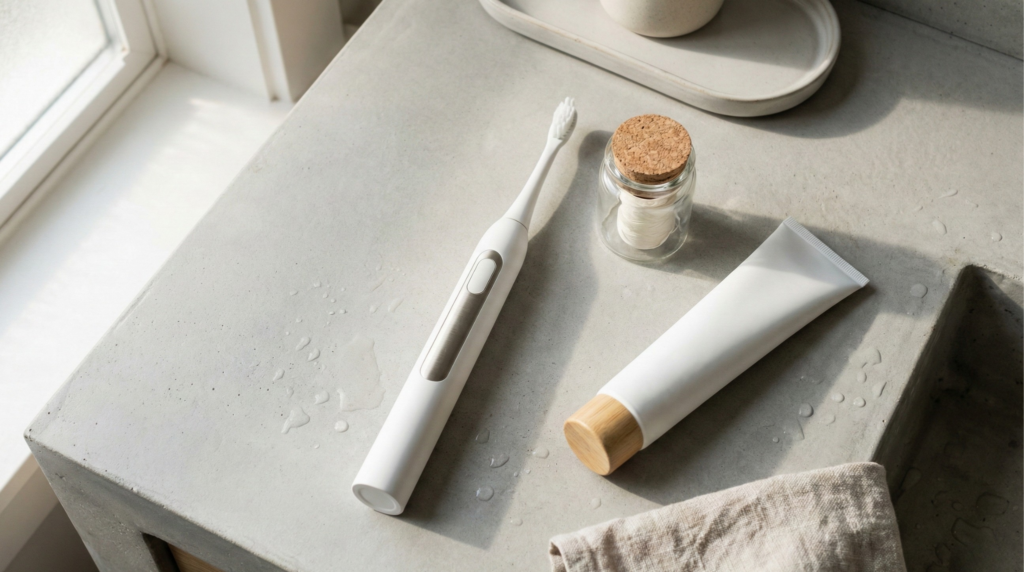
- Apply the 2×2×2 rule: Brush your teeth at least twice a day for two minutes, making sure to use at least two additional tools (interdental brushes, dental floss, a water flosser).
- Use technological and chemical support: Consider purchasing an electric or sonic toothbrush, which are more thorough than conventional manual brushes. A fluoride toothpaste (at least 1,450 ppm) provides basic protection against caries.
- Look after tongue cleanliness: Using a dedicated tongue scraper removes anaerobic bacteria from the back of the tongue, which directly reduces the risk of halitosis.
- Optimise mouth rinsing: After brushing, avoid rinsing the mouth too vigorously with water so that the active ingredients of the toothpaste can work for longer. Use an antiseptic or fluoride mouthwash at a different time of day from brushing.
- Lifestyle modification: Limit consumption of simple sugars, which serve as fuel for micro-organisms. Stop smoking, because tobacco smoke promotes calculus formation and weakens the immune response.
Summary
Dental calculus develops slowly and often asymptomatically, but its consequences can be serious. Regular prevention and professional hygiene are the most effective way to protect both the teeth and the gums.
Your smile deserves the best care!
FAQ — The most frequently asked questions from patients
1. Does calculus removal damage the enamel?
With correct technique, modern ultrasonic devices are safe for enamel. The key is the appropriate technique: an angle of attack of less than 15°, moderate power and adequate water cooling. The procedure removes deposits, not tooth structure.
2. How often should I attend a hygiene appointment?
The standard recommendation is once every 6 months. In patients who tend to accumulate calculus rapidly, in smokers and in patients with periodontal disease, the optimal interval may be shortened to once every 3–4 months.
3. Are home remedies (vinegar, baking soda) effective?
Warning: The use of baking soda, lemon juice or vinegar is dangerous. These substances can cause chemical enamel erosion and gum irritation. Only professional methods are safe and effective.
4. Why do my gums bleed after the procedure?
Slight bleeding and tenderness after the procedure are normal, especially if the calculus was large and was pressing on the gums, causing inflammation. The gums usually heal within 2–5 days. If bleeding persists for more than a week, consult the clinician.
5. Will an electric or sonic toothbrush remove calculus?
An electric or sonic toothbrush can serve as an effective preventive tool — it breaks up bacterial plaque and slows the formation of new deposits. Once calculus has formed, however, it cannot be removed at home — professional scaling is necessary.
6. Will my teeth be whiter after a hygiene appointment?
Yes, air-polishing effectively removes surface staining (from coffee, wine or tobacco), restoring the natural colour of the teeth. It is not, however, a whitening procedure — if you want a brighter shade, discuss in-clinic whitening options with the clinician.
References and scientific sources
Selected scientific articles on dental calculus:
- Chen Y, Wang Y, Zhang J, et al. (2024). Recent advances in the pathogenesis and prevention strategies of dental calculus. npj Biofilms and Microbiomes, 10:53. https://www.nature.com/articles/s41522-024-00529-1
- Kim SY, Kang MK, Kang SM, Kim HE (2018). Effects of ultrasonic instrumentation on enamel surfaces with various defects. International Journal of Dental Hygiene, 16(2):219-224. https://onlinelibrary.wiley.com/doi/10.1111/idh.12339
- Jin Y, Yip HK (2002). Supragingival calculus: formation and control. Critical Reviews in Oral Biology & Medicine, 13(5):426-441. https://journals.sagepub.com/doi/full/10.1177/154411130201300506
- White DJ (1997). Dental calculus: recent insights into occurrence, formation, prevention, removal and oral health effects of supragingival and subgingival deposits. European Journal of Oral Sciences, 105(5):508-522. https://pubmed.ncbi.nlm.nih.gov/9395117/
Information on content and responsibility
This article is intended solely for informational and educational purposes and does not constitute medical advice, a diagnosis or a treatment recommendation. It does not replace a consultation with a dentist or other qualified specialist. Despite every effort to ensure accuracy, the authors accept no liability for decisions made by readers on the basis of the information contained herein.