
Treatment duration, factors influencing the length of therapy and what you can do to shorten treatment.
Orthodontic treatment in adults lasts on average 18 to 30 months, although in simpler cases it may be completed in as little as 12 months, while complex malocclusions may require up to 36 months. The duration depends on the type and severity of the malocclusion, the treatment method chosen, the patient's age and, above all, their cooperation.
If you are considering getting braces and want to know how long your treatment will take, this article provides concrete data from scientific studies, a comparison of methods and practical advice on how to avoid unnecessary delays.

How long does orthodontic treatment in adults take on average?
The average duration of fixed braces in adults is approximately 23–27 months, whereas in adolescents it is approximately 20–24 months. The difference results from slower bone remodelling in adults and the more frequent occurrence of complex malocclusions requiring multi-stage treatment.
A systematic review (Tsichlaki et al., 2016) found that the median duration of treatment with fixed appliances is approximately 19–20 months. It should be noted, however, that this median includes adolescents — in whom treatment is usually faster. An adult patient should therefore expect a slightly longer treatment time.
Dr Prażmo emphasises: "Adult patients often ask whether their treatment will take longer than in adolescents. In most cases the difference is 2–6 months — not years. It is crucial to set realistic expectations at the start and adhere to the clinician's recommendations."
What influences the duration of orthodontic treatment?
The duration of braces depends on several key factors. Below we present the most important ones:
1. Type and severity of the malocclusion
Simple anterior crowding may require only 12–18 months of treatment. Complex malocclusions — such as an open bite, a crossbite or significant skeletal discrepancies — may extend treatment to 30–36 months. Skeletal discrepancies in adults are sometimes treated in combination with orthognathic surgery.
2. Treatment method
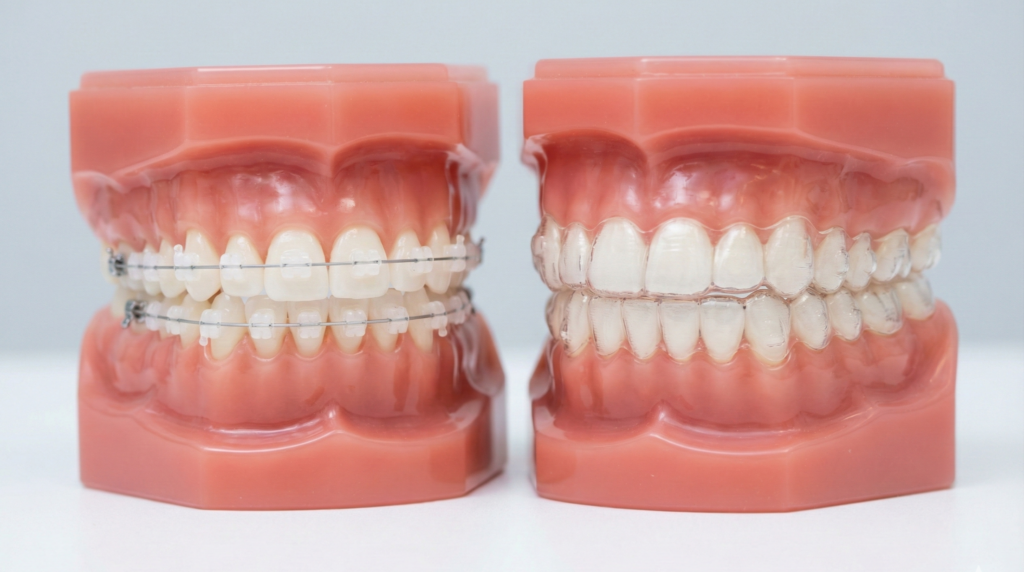
The choice of appliance affects the treatment time. A metal fixed appliance is the most effective in complex cases and allows precise control of tooth movement. Invisalign (clear aligners) works very well in mild to moderate cases but may be less efficient in severe malocclusions.
3. Age and bone condition
In adults, bone remodelling is slower than in adolescents, which may extend treatment by 2–6 months. In addition, adults more frequently present with periodontal disease, previous prosthetic restorations or missing teeth — all of which require the treatment plan to be adapted.
4. Patient compliance
This is the factor over which the patient has the greatest influence. Missing follow-up appointments, inadequate hygiene (leading to caries and the need to interrupt treatment), debonding brackets through hard foods, and failure to wear elastics as directed are the most common causes of treatment delays.
Comparison of treatment duration — orthodontic methods
The table below shows approximate treatment durations for different methods in adult patients. The ranges cover cases of varying complexity.
| Method | Treatment duration | Optimal for | Notes |
| Metal fixed braces | 18–30 months | All malocclusions | Most versatile. Shortest time in complex cases. |
| Ceramic fixed braces | 18–32 months | Aesthetics + efficacy | Similar efficacy to metal; slightly higher friction. |
| Invisalign (aligners) | 12–24 months | Mild/moderate malocclusions | Requires discipline (22 h/day). Aesthetic. |
| Lingual braces | 20–36 months | Patients requiring full aesthetics | Invisible. Longer adaptation, higher cost. |
| Self-ligating braces | 16–26 months | Most malocclusions | Fewer follow-up visits. Lower friction forces. |
→ A detailed comparison of methods can be found in our article: Which orthodontic appliance to choose?
How to shorten the time in braces?
Although the treatment duration depends mainly on the complexity of the malocclusion, there are specific actions that help avoid unnecessary delays:
- Attend follow-up appointments regularly — the intervals between visits (usually 4–6 weeks) are planned to make optimal use of the forces of the appliance. Missing appointments delays the entire process.
- Maintain good hygiene — caries or gingivitis during treatment may force a break and removal of the archwire. Every such break extends treatment.
- Avoid hard and sticky foods — a debonded bracket means an emergency appointment and a setback in progress. Every bracket failure extends the process.
- Wear elastics as directed — elastics correct the relationship between the jaws. Failure to wear them is one of the most common causes of treatment prolongation.
- Discuss accelerating techniques with the orthodontist — e.g. micro-osteoperforations (MOPs) or low-level laser therapy (LLLT). These are adjunctive methods that may shorten treatment by 20–30%, although they are not suitable for every patient.
Dr Prażmo adds: "The most effective way to shorten treatment is simply patient cooperation. In my practice I see that patients who attend appointments regularly, maintain good hygiene and wear elastics as directed complete treatment on average 3–4 months earlier than those who frequently miss appointments or neglect the appliance."
What happens after the braces are removed? Retention
Zdjęcie aparatu to nie koniec leczenia — po nim następuje faza retencji, która jest równie ważna jak samo noszenie aparatu. Bez retainera zęby mają tendencję do powrotu do pierwotnej pozycji (tzw. nawrotu recydywy).
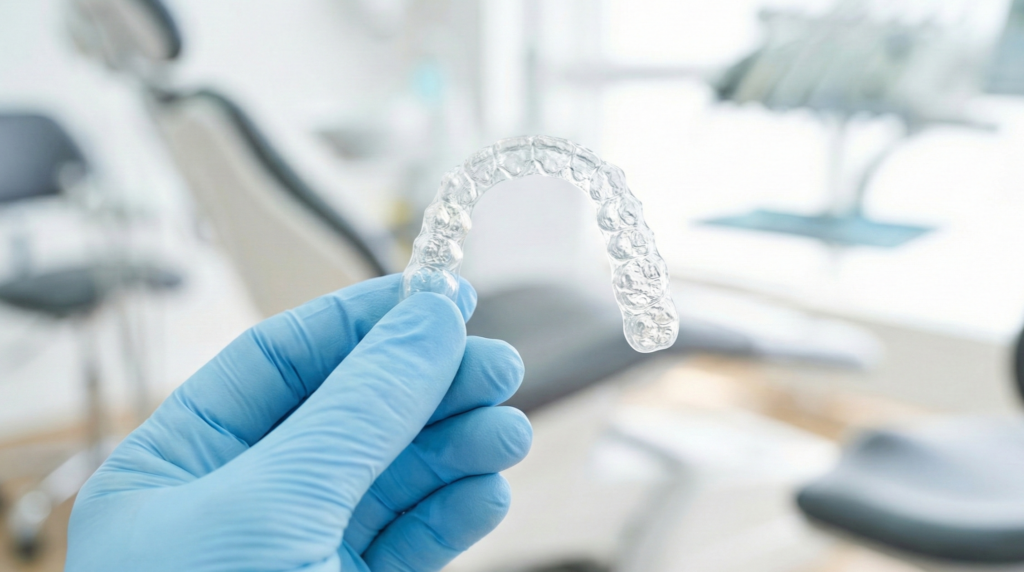
A bonded retainer (a wire cemented to the inner surface of the teeth) is usually worn for many years, and many orthodontists recommend it indefinitely. A removable retainer (Essix or Hawley) is initially worn at night and then gradually reduced. More about retention in our article: Retention after orthodontics — retainers.
Does longer treatment cost more? Financing
Longer treatment means more follow-up visits, which may increase the total cost of therapy.
Modern Dental & Orhodontics (Klinika MDO) oferuje raty PayU — możesz rozłożyć koszt leczenia ortodontycznego na wygodne miesięczne raty. Szczegóły finansowania omówisz podczas pierwszej konsultacji.
Frequently asked questions (FAQ)
How long does wearing braces on the upper teeth take?
Treatment of the upper arch alone lasts on average 12–18 months, although this depends on the complexity of the malocclusion. In many cases the orthodontist recommends treating both arches, as the relationship between the upper and lower teeth affects long-term stability.
Does Invisalign work faster than fixed braces?
In simple and moderately demanding cases Invisalign can shorten treatment to 12–18 months. In complex malocclusions fixed braces may be more effective and faster. The choice of method should be discussed with the orthodontist after full diagnostics.
Do braces in adults work more slowly than in adolescents?
Yes, although the difference is small — on average 2–6 months longer. In adults bone remodelling is slower, but the final results are comparable.
What prolongs the time in braces?
The most common causes are: missing follow-up appointments, poor hygiene leading to caries, debonding brackets through hard foods, failure to wear elastics and complex malocclusions requiring multi-stage treatment.
How long is a retainer worn after the braces are removed?
A bonded retainer is usually worn for many years — many orthodontists recommend it indefinitely. A removable retainer is initially worn at night, then gradually reduced. Every case is individual.
Can orthodontic treatment be shortened?
The most effective method is regular appointments, good hygiene and avoiding damage to the appliance. Adjunctive techniques also exist, such as micro-osteoperforations (MOPs), which can shorten treatment by up to 20–30%.
Is orthodontic treatment for adults covered by the NFZ (Polish national health fund)?
Orthodontic treatment in patients over 12 years of age is not covered by the NFZ. The full cost is borne by the patient. At Modern Dental & Orthodontics we offer the option of spreading the cost over PayU instalments.
How long does orthodontic treatment take before a wedding?
If you are planning a wedding in 12–18 months, it is worth starting treatment as soon as possible. In simple cases Invisalign can produce a visible improvement within just a few months. In more complex cases the orthodontist may suggest phased planning — with the most visible corrections first.
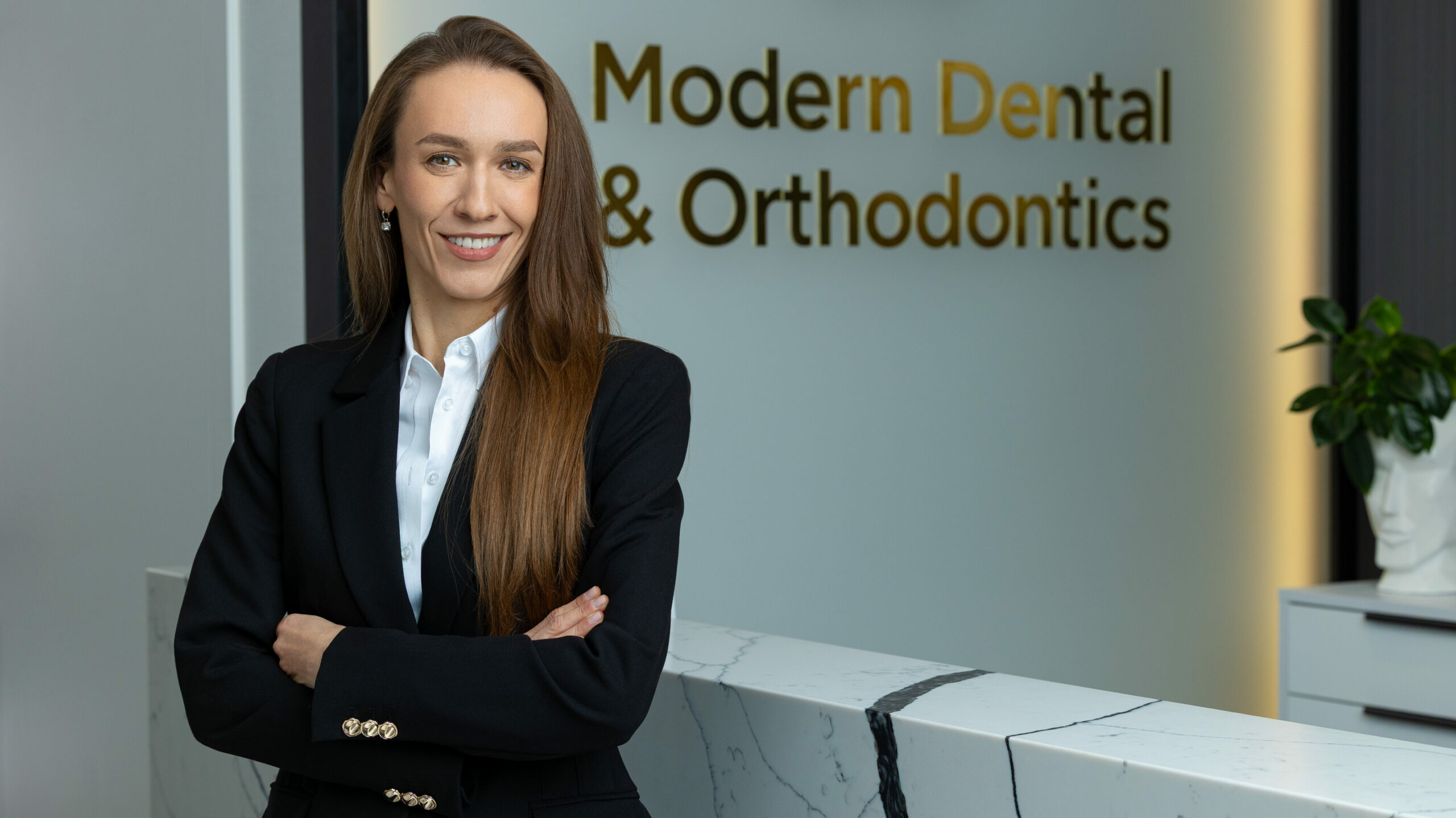
Expert: Dr. Ewa Prażmo, DMD, PhD
Specialist orthodontist, Medical Director & Co-owner of Modern Dental & Orthodontics, Warsaw
Doctor of Medical Sciences, Medical University of Warsaw (WUM). Author of scientific publications. Lecturer at WUM in 2013–2018. Orthodontic practice since 2015.
Read more on the Modern Dental & Orthodontics website:
Orthodontist Warsaw Wola | Orthodontic appliances and Invisalign
What does getting braces look like? A step-by-step guide
How to brush your teeth with braces? A hygiene guide
First Visit to the Orthodontist: The Process and Treatment Plan | Blog
Orthodontic braces after 50 — is it "too late" at this age?
Scientific sources
1.Link:https://pubmed.ncbi.nlm.nih.gov/26926017/
Tsichlaki A, Chin SY, Pandis N, Fleming PS. “How long does treatment with fixed orthodontic appliances last? A systematic review.” Am J Orthod Dentofacial Orthop. 2016;149(3):308–318.
2.Link: https://progressinorthodontics.springeropen.com/articles/10.1186/s40510-020-00334-4
Abbing A, Koretsi V, Eliades T, Papageorgiou SN. “Duration of orthodontic treatment with fixed appliances in adolescents and adults: a systematic review with meta-analysis.” Prog Orthod. 2020;21(1):37.
3.Link: https://pubmed.ncbi.nlm.nih.gov/20685528/
Fleming PS, DiBiase AT, Lee RT. “Randomized clinical trial of orthodontic treatment efficiency with self-ligating and conventional fixed orthodontic appliances.” Am J Orthod Dentofacial Orthop. 2010;137(6):738–742.
4.Link: https://pubmed.ncbi.nlm.nih.gov/16473715/
Skidmore KJ, Brook KJ, Thomson WM, Harding WJ. “Factors influencing treatment time in orthodontic patients.” Am J Orthod Dentofacial Orthop. 2006;129(2):230–238.