
Pregnancy is a special time, full of joy and anticipation, but also a period of major changes in the body. Amid the preparations for the new role, it is easy to overlook an area that is essential for the health of both mother and baby — oral health.
In this guide we will dispel all doubts about caring for your teeth during pregnancy. We will explain why it is so important, which dental procedures are safe and which should be deferred, and we will share practical advice on daily hygiene.

Why do teeth require special care during pregnancy? The effect of hormones on the oral cavity
During pregnancy hormonal changes occur in the body. The rapid rise in oestrogen and progesterone levels is crucial for the developing baby but also significantly affects the condition of the gums and teeth.
Many expectant mothers experience so-called pregnancy gingivitis. Its typical symptoms are redness, swelling and bleeding of the gums during brushing. This is one of the most common oral conditions during pregnancy, affecting 60–75% of pregnant women.
In addition, dietary changes during pregnancy — more frequent meals and cravings for sweet or sour snacks — increase the exposure of the teeth to acids and sugars, which accelerates the development of caries.
Planning a pregnancy? Start with a dental check-up!
The best time for comprehensive dental care is before the planned conception. Treating teeth before pregnancy avoids the stress and risk of undertaking more complex procedures while pregnant.
Before pregnancy it is worth scheduling a check-up appointment at which the dentist will assess the condition of your oral cavity. This is the ideal time for:
- Professional hygiene: Removal of calculus and deposits is the foundation of gingivitis prevention.
- Treatment of cavities: Treating all carious lesions eliminates the risk of their progression and complications such as toothache during pregnancy.
- Any elective procedures: If root canal treatment or wisdom tooth extraction is necessary, it is best to have it done now.
A dental check-up is an investment in health — both yours and your baby's.
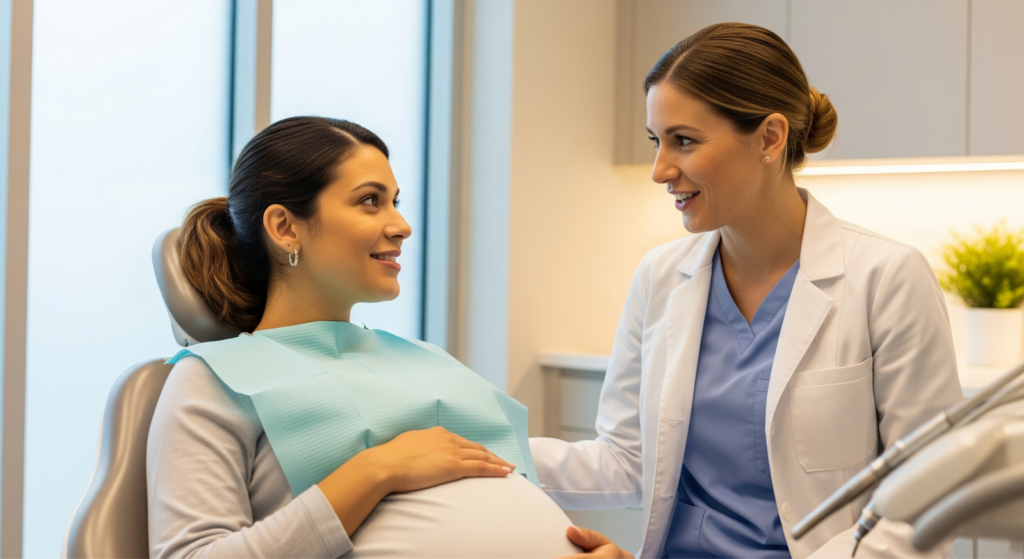
A safe dental visit during pregnancy — facts and myths
Fear of a dental visit during pregnancy is common but entirely unfounded. Modern dentistry has methods that are fully safe for the expectant mother and the baby.
The safest period for elective dental treatment during pregnancy is the second trimester. Organogenesis (the formation of the foetal organs) is already complete, and the size of the uterus does not yet cause significant discomfort when lying in the dental chair.
And what about the most common concerns?
Anaesthesia
The local anaesthetics used in dental clinics (usually without vasoconstrictors) act locally and do not cross the placental barrier. They are safe for the foetus and allow the procedure to be performed painlessly.
Dental radiography during pregnancy
Taking a dental radiograph during pregnancy is prohibited. Radiographs are taken only in situations of absolute necessity and serious threat to health, and only with the use of a protective lead apron on the abdomen.
Tooth extraction during pregnancy
Extraction is a last-resort procedure, performed when other treatment methods have failed. It can be carried out safely, preferably in the second trimester, under local anaesthesia.
Procedures such as teeth whitening, elective implant placement and extensive dental surgery should be deferred until after delivery.
How to care for your teeth at home — key principles of oral hygiene during pregnancy
Daily, thorough oral hygiene during pregnancy is the foundation of prevention. A few simple habits are enough to significantly reduce the risk of problems:
- Brush your teeth gently but thoroughly. Use a toothbrush with soft or medium bristles so as not to irritate sensitive gums. Use a fluoride toothpaste (at least 1,000 ppm of fluoride).
- Do not forget to floss. This is key in the fight against gingivitis, as it removes food debris and bacterial plaque from the interdental spaces that a toothbrush cannot reach.
- Beware of acids. If you suffer from nausea and vomiting, do not brush your teeth immediately after an episode. First rinse your mouth with water to neutralise the acids — brushing straight away can damage the softened enamel.
- Pay attention to your diet. Limit simple sugars and include calcium-rich foods, which are the building blocks of your teeth and your baby's.
FAQ – Frequently Asked Questions
1. Can pregnancy gingivitis harm the baby?
Scientific studies indicate a possible link between advanced periodontal disease in the mother and the risk of premature birth and low birth weight of the baby. This is why maintaining gum health is so important during pregnancy.
2. What to do in the event of sudden toothache?
First of all, you can apply a cold compress to the cheek on the side of the aching tooth. Avoid taking analgesics on your own — the only safe analgesic during pregnancy is paracetamol, but even this should be taken only after consulting a doctor. Contact the dentist as soon as possible.
3. Can I use a mouthwash during pregnancy?
Yes, but choose alcohol-free products. Gentle herbal rinses (e.g. sage, chamomile) or fluoride-containing ones, which provide additional protection for the enamel, may be a good option.
Summary
Oral health is an integral part of self-care during pregnancy. Regular check-ups, thorough hygiene and an awareness of the changes taking place in your body are the best way to ensure a healthy smile throughout the nine months and beyond.
Are you pregnant or planning motherhood? Make sure that unexpected oral discomfort does not disrupt the beautiful time of anticipation. Book an appointment at Modern Dental & Orthodontics.