
A beautiful, healthy smile is every parent's dream for their child. One of the ways to achieve this goal is orthodontic treatment. But when is the right time to start? In this article we will discuss the key aspects of orthodontic treatment in children.
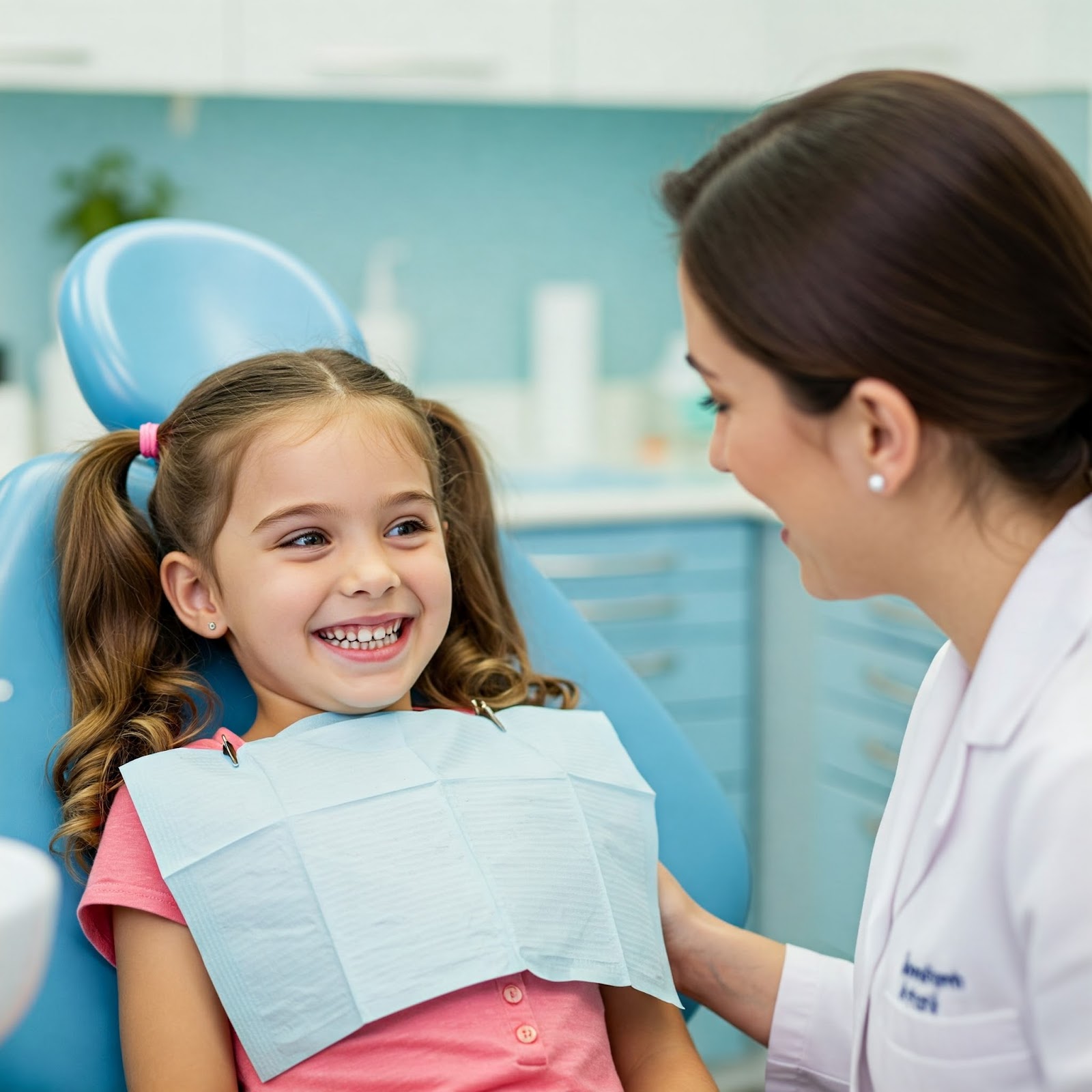
When is the first visit to the orthodontist crucial?
An early consultation with a specialist is extremely important in planning orthodontic treatment for children. It is recommended that the first orthodontic assessment be carried out at around the age of 7.
Early diagnosis allows development to be monitored and, if necessary, early orthodontic treatment to be planned or the optimal time for the start of treatment to be determined.
Consult an orthodontist if you notice any of the following signs in your child:
- Marked facial asymmetry.
- Teeth growing over one another (crowding) or with large gaps between them.
- Problems with correct speech.
- Persistent mouth breathing or a tendency to keep the mouth open.
- A chin that is clearly protruded forward or set back relative to the rest of the face.
- Bad habits such as thumb sucking, nail biting or object biting, and teeth grinding.
- Loss of primary teeth at too early an age.
- Tongue dysfunction.
Removable appliance — from what age?
Aparaty ruchome są często pierwszym etapem leczenia ortodontycznego u dzieci. Stosowane są w okresie uzębienia mieszanego (kiedy dziecko ma zarówno zęby mleczne, jak i stałe). Zazwyczaj aparat ruchomy zalecany jest najwcześniej między 6 a 14 rokiem życia, w zależności od indywidualnej sytuacji i rodzaju wady zgryzu. Jeżeli nasilona dysproporcja wielkości szczęki lub żuchwy zostanie zdiagnozowana wcześniej, terapię ortodontyczną rozpocząć należy przed okresem wymiany uzębienia mlecznego na stałe.
Removable appliances are used to correct crowding, widen the dental arches and correct the size of the maxilla relative to the mandible. An important proviso is that their effectiveness depends largely on the child's cooperation — they must be worn for the number of hours recommended by the orthodontist.
When are fixed braces fitted?
Fixed braces for a child are usually fitted at a later stage. Najczęściej po wyrżnięciu większości lub wszystkich zębów stałych. most commonly after the eruption of most or all of the permanent teeth, i.e. around the age of 11–15. In selected cases, however, the orthodontist may recommend fitting braces earlier. Decyduje o tym ortodonta na podstawie oceny zgryzu, rozwoju szczęki i ogólnego stanu zdrowia jamy ustnej. Stałe aparaty ortodontyczne są bardziej precyzyjne i pozwalają na korekcję bardziej złożonych wad zgryzu.
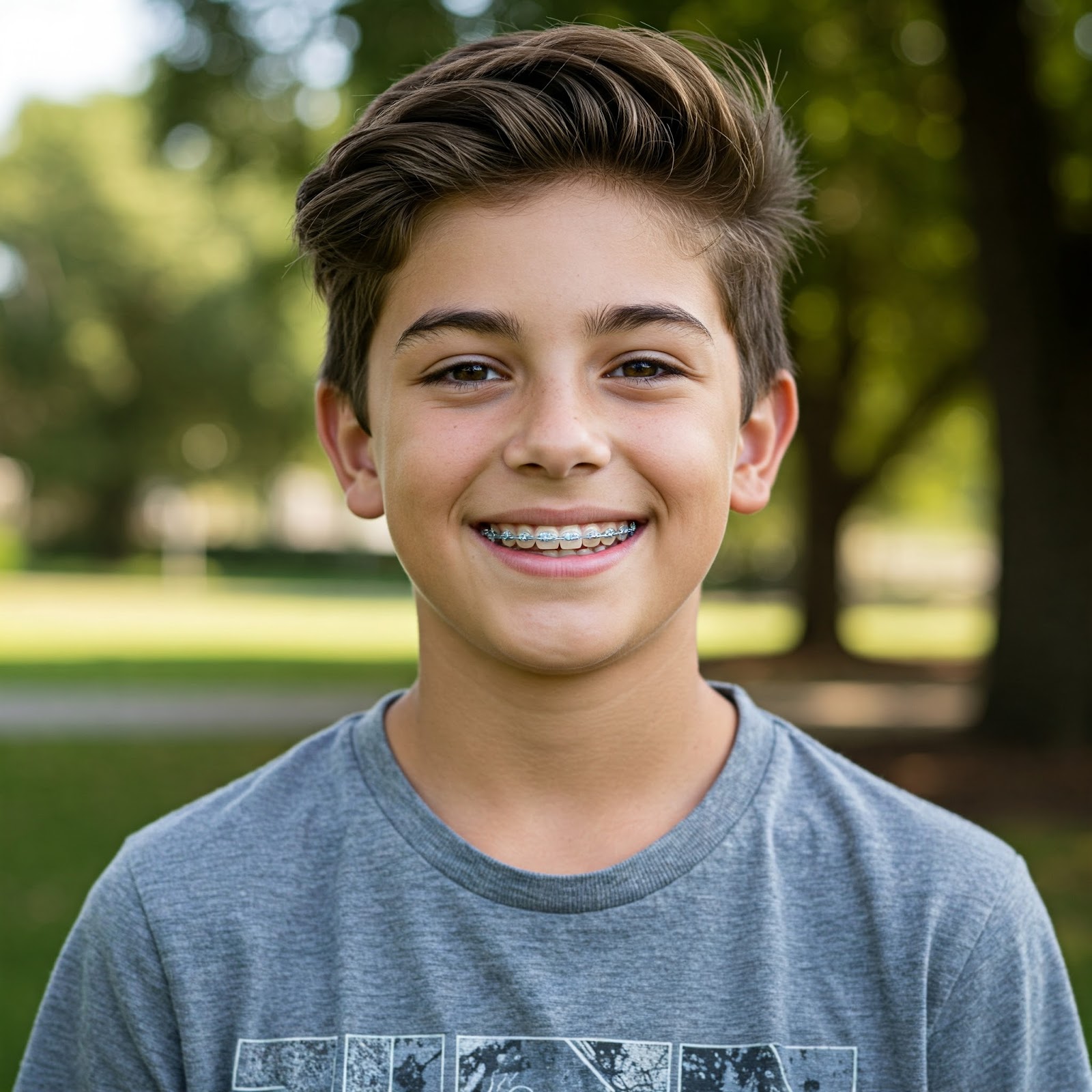
Braces on primary teeth — is it possible?
In rare cases, for severe malocclusions or to maintain space for erupting permanent teeth, the orthodontist may consider the use of certain fixed appliance elements even during the primary-dentition period. This decision is always taken individually. Decyzja o założeniu aparatu na mleczne zęby jest zawsze indywidualna i podejmowana przez specjalistę.
Factors determining the timing of braces
The final decision on when braces can be fitted for a child depends on many factors, including:
- Type and severity of the malocclusion: Some malocclusions require early intervention; others can be treated more effectively at a later age.
- Age and stage of the child's development: The orthodontist assesses the maturity of the occlusion and the child's overall development.
- Eruption of the permanent teeth: Fixed braces treatment often begins after most of the permanent teeth have appeared.
- Cooperation of the child and parents: The effectiveness of treatment, especially with removable appliances, depends on the commitment of the patient and their carers.
Summary
Determining the ideal time to fit braces for a child is complex and requires an individual assessment by a paediatric orthodontist. A key recommendation is to schedule the first visit at around the age of 7. czy będzie to aparat ruchomy, czy stały aparat ortodontyczny, wczesne leczenie może znacząco wpłynąć na zdrowie i estetykę uśmiechu dziecka w przyszłości. Może również istotnie uprościć i skrócić ostateczny czas leczenia aparatem stałym, po wyrznięciu wszystkich zębów.
We encourage you to book a first consultation at our clinic in Wola, Warsaw. Dr n. med. Ewa Prażmo, specialist orthodontist, Medical Director of Modern Dental & Orthodontics (Klinika MDO), will carry out a thorough assessment and recommend the best course of action for your child. pierwszą wizytę konsultacyjną w naszej klinice na warszawskiej Woli. Dr n med Ewa Prażmo specjalista ortodonta odpowie na wszystkie Państwa pytania i zaproponuje najlepsze rozwiązanie dla Waszego dziecka.